HIGH-POWER ROCKETRY
Level 1 High-Power Rocket
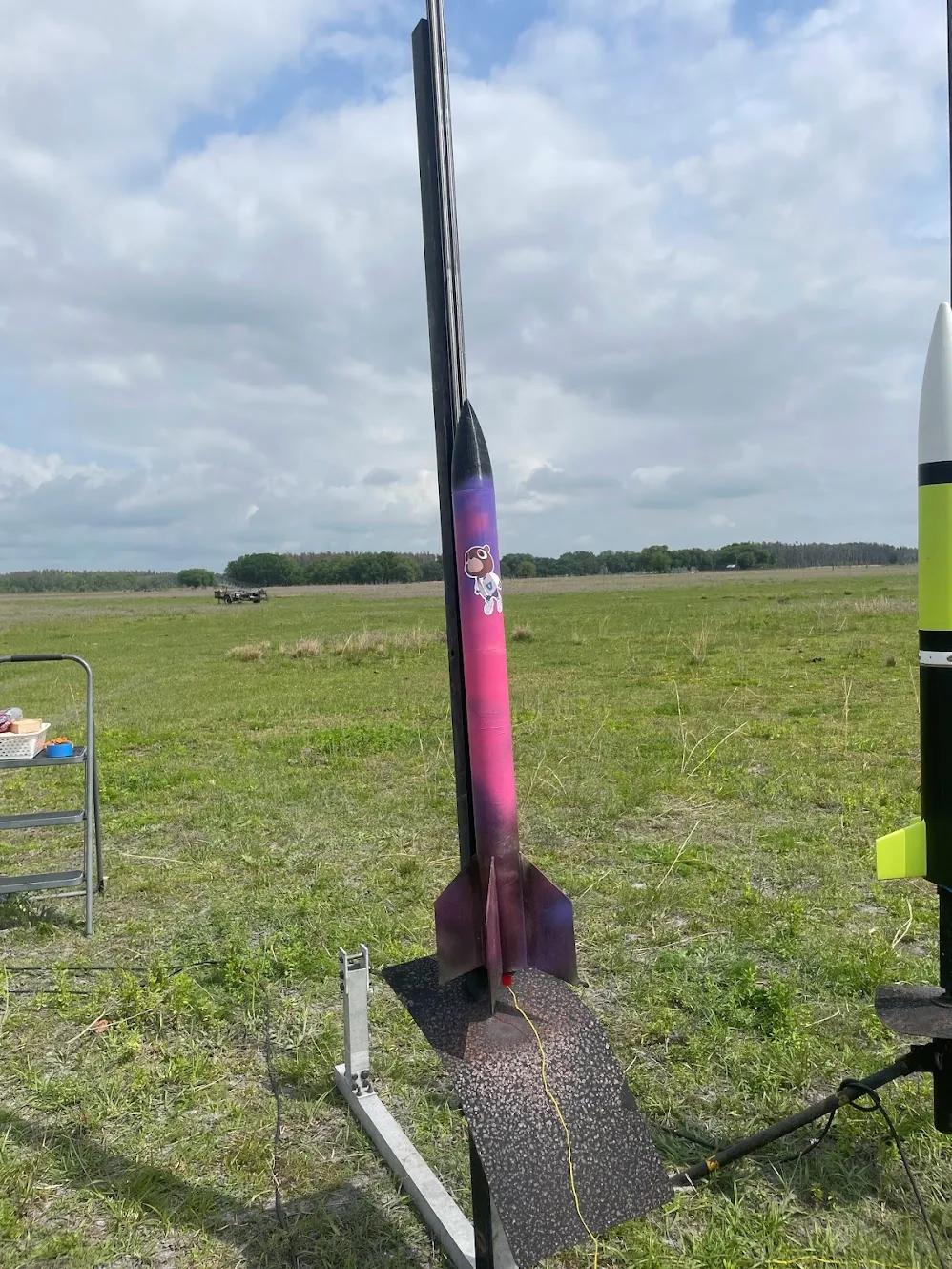
Four days before launch, I found out my rocket wasn't ready to fly. Here's how I fixed it and earned my Level 1 certification.
AeroTech H135 • 2,124 ft • Level 1 Certified
HIGH-POWER ROCKETRY
Four days before launch, I found out my rocket wasn't ready to fly. Here's how I fixed it and earned my Level 1 certification.
AeroTech H135 • 2,124 ft • Level 1 Certified
01
This was my first high-power rocket certification. I built the rocket, prepared it for flight, and used OpenRocket to simulate its performance. I thought I was ready for launch weekend, until one last inspection showed me otherwise.
02
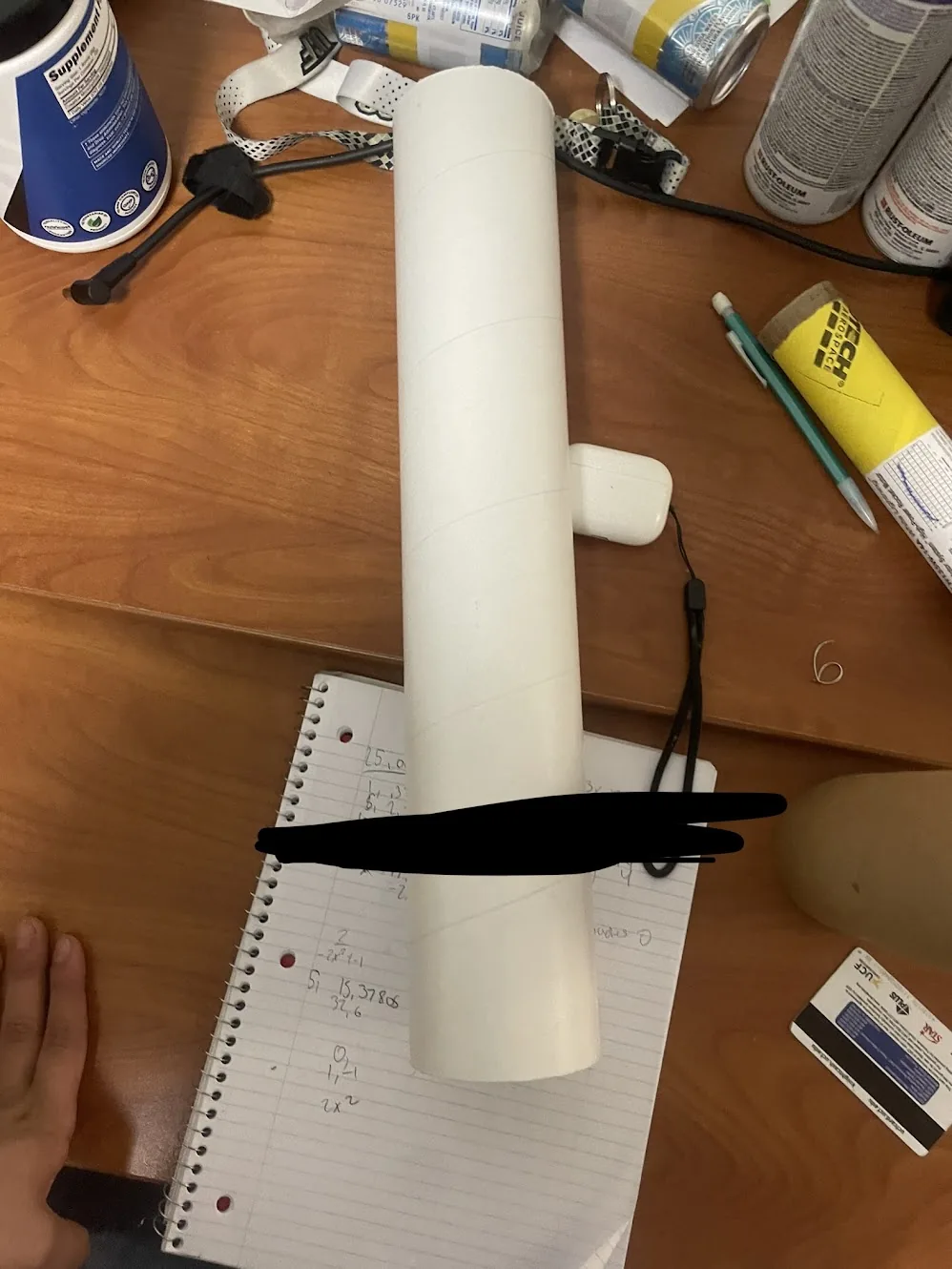
I brought my rocket to the AIAA club officers for a final check. That's when they pointed out a problem: I'd cut too much off the body tube, leaving too little room for the parachute, Nomex, and recovery harness.
They suggested an alternative involving shear pins, but I couldn't get the hardware in time. Another option was to rebuild the upper section and wait until the next launch. I really wanted to fly that weekend, so I started looking for a way to work with the materials I already had.
03
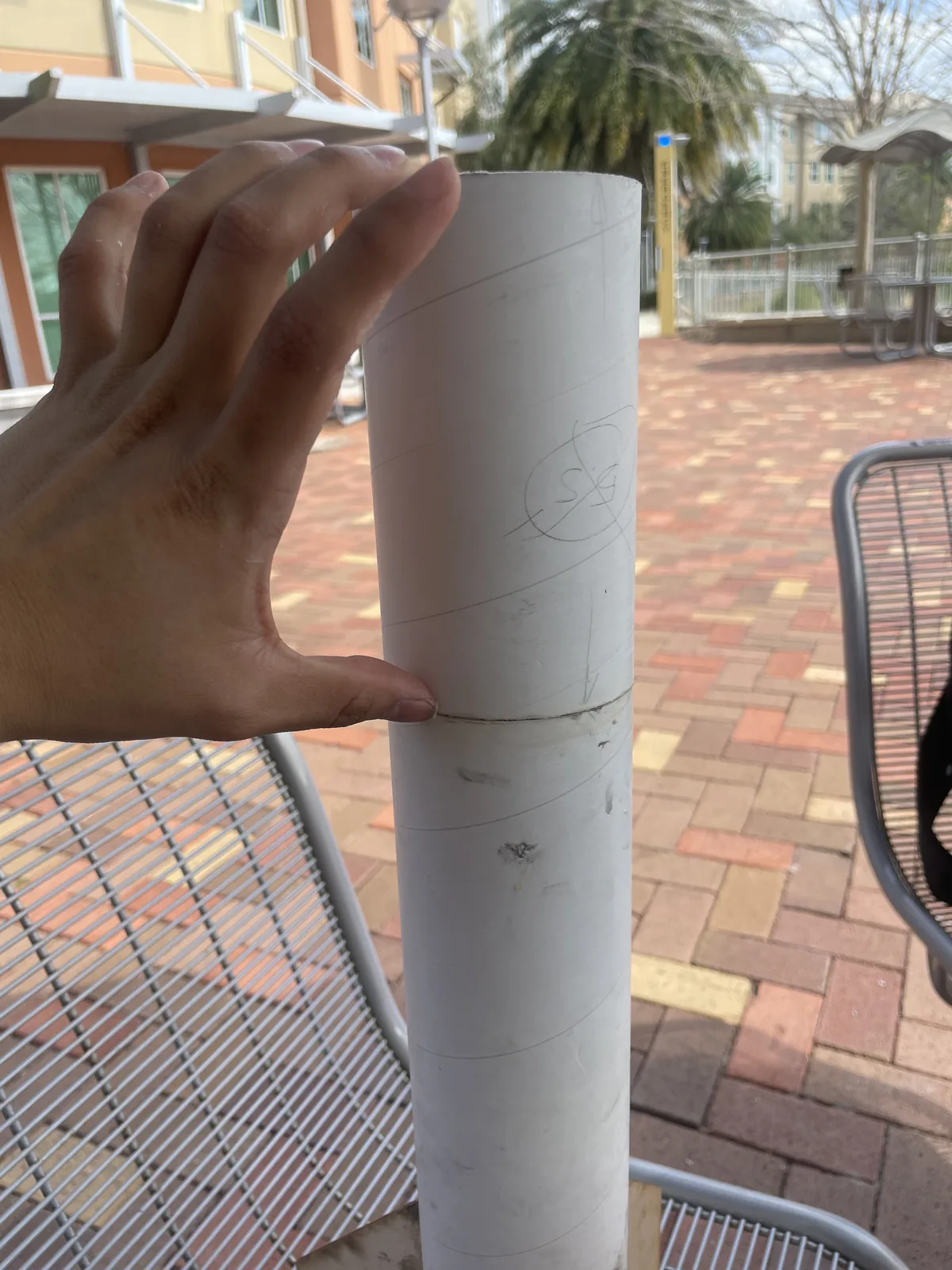
I spent time searching for solutions online, but nothing quite fit my situation. Then I came across a video showing how to cut a coupler. That gave me an idea: I still had the section of body tube I'd cut off. If I could use part of the coupler to join it back on, I could recover the space I needed.
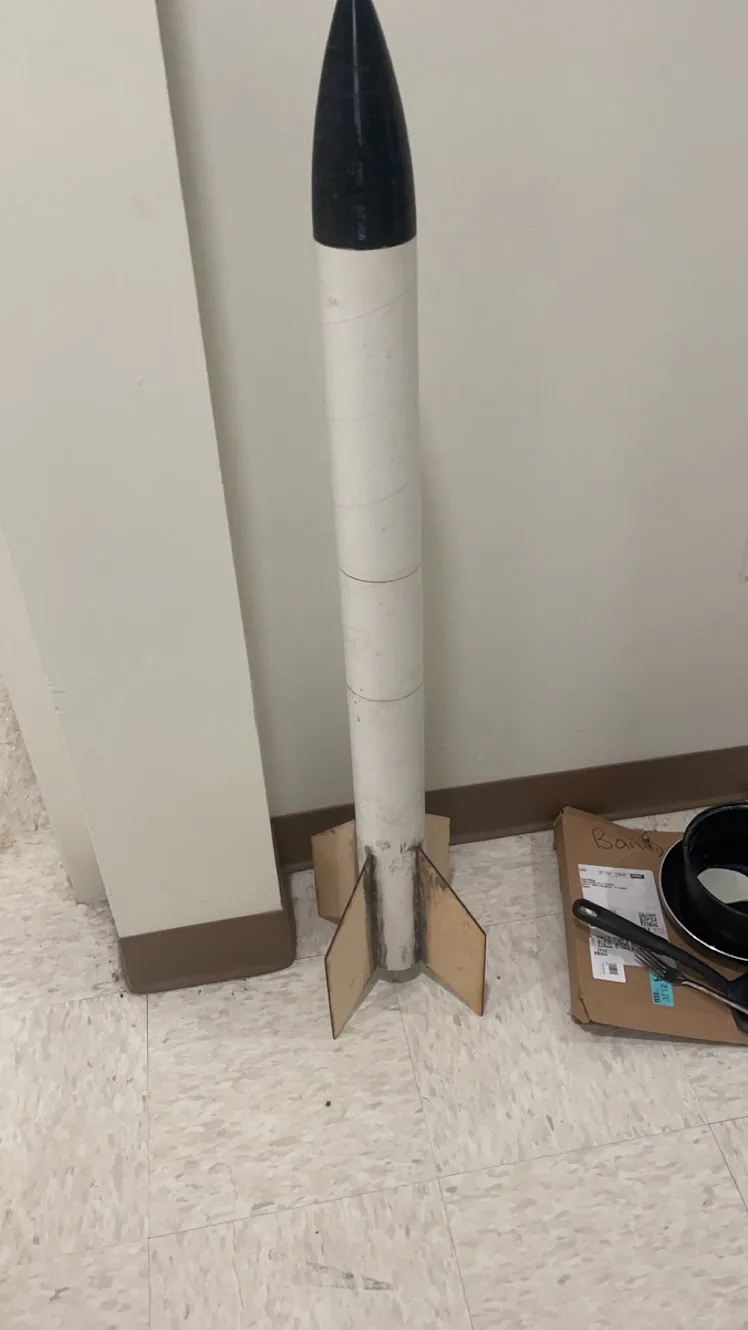
I cut the coupler, fitted the leftover tube section, and bonded the pieces together. The glue-up was a little messy and I had to work quickly, but the extension gave the parachute, Nomex, and harness enough room to fit.
04
After modifying the recovery compartment, I returned to OpenRocket to evaluate the rocket's stability and predicted flight performance. The simulation showed a stability margin of 2.22 calibers, with the center of gravity ahead of the center of pressure.
OpenRocket predicted an apogee of 2,279 ft and a maximum velocity of 572 ft/s. During the actual certification flight, the rocket reached 2,124 ft, approximately 6.8% below the predicted altitude.
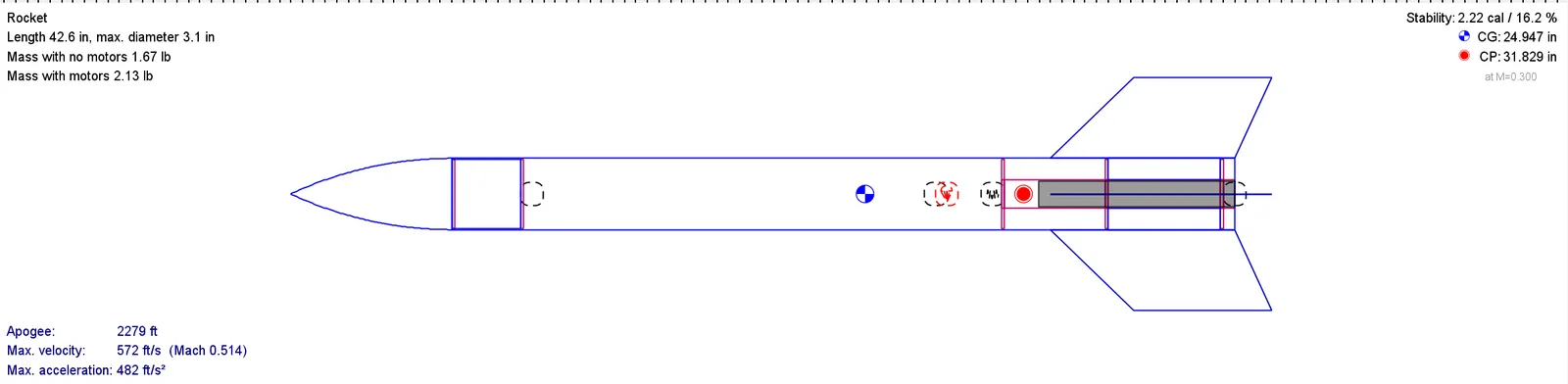
OpenRocket vehicle configuration and flight predictions
05
Level 1 Certification Flight
I was nervous watching the rocket lift off, especially after the last-minute airframe change. The moment I was waiting for was the ejection charge. Would the modified section stay together, and would the parachute come out? It did. The parachute deployed shortly after apogee, and I earned my Level 1 certification.
What I took away: I learned to check packaging earlier, make the most of the materials I have, and rerun simulations whenever I change a design.